Thursday, October 18, 2012

SAVE THE DATE - GEM Day: A Field Day for Chicks Who Play


As announced at the last Mother-Daughter Health Forum and Luncheon, we have decided to take a break from the luncheon format. In 2013, we will roll out Chicks Who Play, an initiative to keep women on the move! During National Women's Health Week, we will host our first GEM Day: A Fun Field Day for Chicks Who Play! We are going back to the the good old times when we could just run, jump and PLAY various games during an annual day of recess...FIELD DAY!

SAVE THE DATE:
Saturday, May 18, 2013

Rosa M. Douglas Scholarship Foundation
presents
GEM Day:
A Fun Field Day for Chicks Who Play!
11am - 1pm
Joe Collins Stadium
(Chester Fairgrounds)
Chester SC

Thursday, October 11, 2012

The Nutribullet Review

If you are into juicing and blending, I have a product that you will absolutely love. LOVE, LOVE, LOVE! Let me first say that I am not getting paid for this review (although, it would be nice!) and that I bought it with my own money...kind of...I'll get to that near the end of the review. So, what is it? The Nutribullet by Magic Bullet. Some call it a blender, but actually it is an extractor. Thus, making it way more powerful than an average blender. It breaks down all types of produce, seeds, grains and nuts. In it, you can make healthy juices, smoothies, dips, sauces, flours, nut butters, and more. My personal favorite recipes are Nutriblasts (as described in the booklet), sorbets, and fresh fruit shakes. It is like a juicer and blender all-in-one!

Included in the box are the following: the motorized base, a milling blade, an extractor blade, 2 regular cups, 1 tall cup, 1 handled comfort lip ring, a comfort lip ring, 2 resealable lids, and a resource booklet (guide, recipes, and nutirition plans).

How it works
Mostly, I use the Nutribullet's extractor features. It is the primary blending blade. It liquifies fruits and vegetables for easier consumption and maximum digestion. The longer you let it run, the smoother the items will become. However, be careful! The power of this machine is incredible. It has 600 watts of power, so it works fast and letting it run too long will cause your blend to heat up. Thus, when making drinks, I prefer using frozen fruits and/or veggies. If I'm making a soup or dip, it doesn't really matter...unless I cannot find out-of-season or ripe produce. Then, frozen is almost a sure winner.


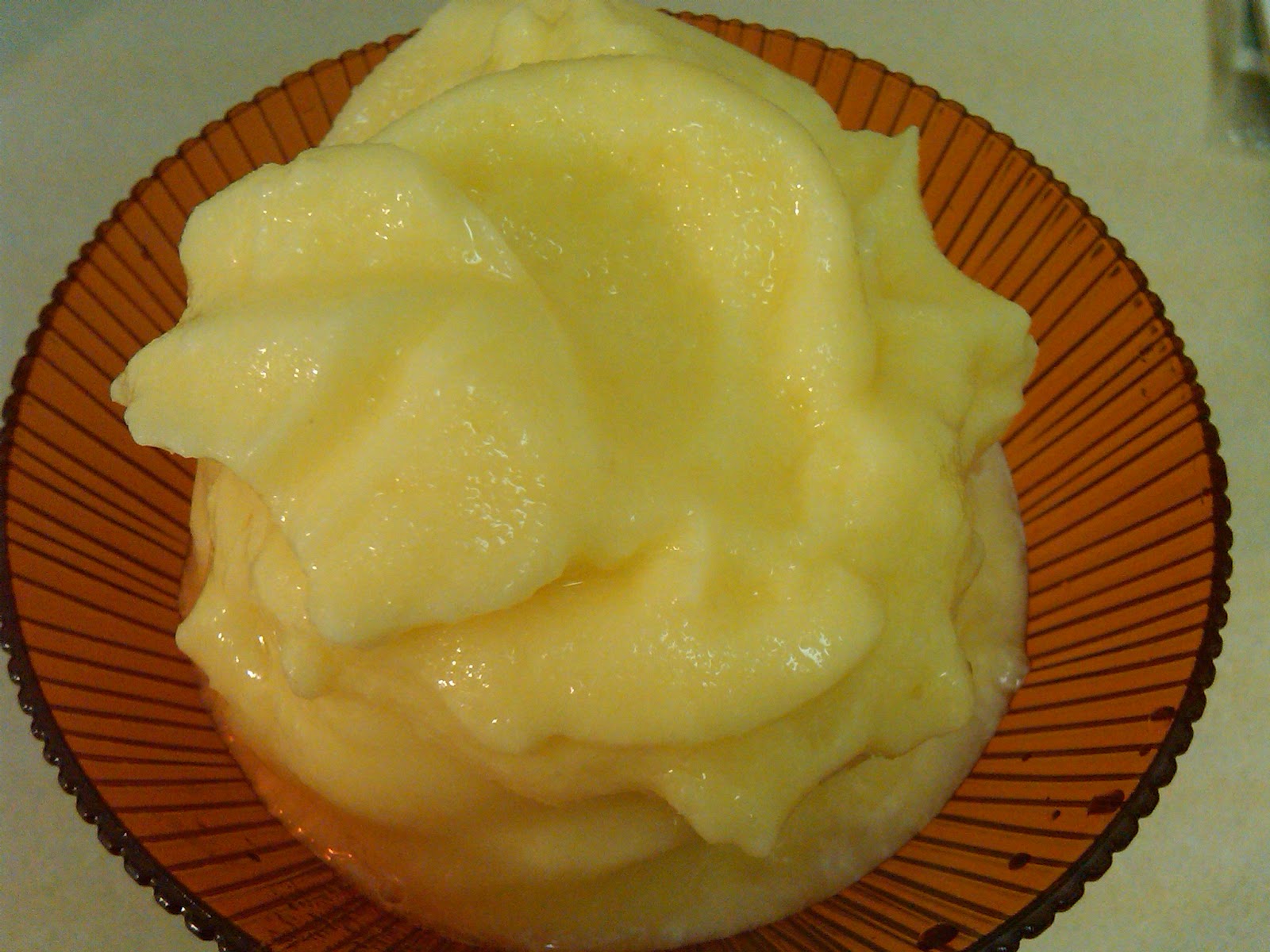
Sorbet has become my favorite hot weather desserts since getting the Nutribullet. Check out two of my blends below. I would post more of my concoctions, but you will be licking your computer screen!


Pina Colada Sorbet
Cherry Sorbet
Pina Colada Sorbet
1/2 cup coconut milk, (unsweetened)
Splash of Pineapple juice
1/2 cup pineapple, frozen
Drop of Coconut Extract
Few cubes of ice

Throw items into the Nutribullet in the order listed. You want the frozen fruit and ice closest to the blade. Reverse the order for traditional blenders. Blend. If mix is too thick, add a splash of liquid (milk, juice or water). Serve immediately. Freezing may require reblending.


Cherry Sorbet

1/2 cup frozen cherries
1/2 cup almond milk, vanilla

Throw items into the Nutribullet, blend, and enjoy! Please note, I am not a chocolate lover, but I have been told that adding chocolate protein powder, chocolate cacao powder, or substituting the vanilla almond milk with chocolate almond milk or chocolate soymilk will bring you a chocolate-cherry delight!


The Nutribullet also comes with a milling blade that allows you to make nut butters (peanut butter, almond butter, cashew butter, etc.) and flours (oat, bran, whole wheat, etc.). Using this tool definitely makes for healthier baking. Seriously, you can make oatmeal flour out of regular ol' Quaker Oats and turn Truvia into a healthier powdered sugar. Holiday baking may have become much healthier!

Clean Up is a Breeze
The power and results of the blends are great! However, the clean up is the absolute best part. I own a juicer and traditional blender. The challenge in using these items regularly is the clean up. The juicer has so many parts to be sanitized. Although I do find it easier to clean than a sink full of pots, pans, and dishes, it can still be somewhat an inconvenience. The Nutribullet on the other hand only requires a simple quick wash or rinse of the cup and blade. It can't get much better than that!

The Ultimate Deal
The Nutribullet sells online and through the infomercial for $119. It retails at Target and Walmart, and other discount stores for $99.99. Well, I found out that Bed, Bath, and Beyond carries it for $99.99 minus the 20% off coupon, totaling $79.99 plus tax. I went to BB&B with coupon in tow to get it, but they didn't have it in stock. The store associate asked me if I wanted to order it and have it delivered to my house...at no additional charge. Yes, I exclaimed! So, my price was $40 off the TV price and the bonus...I had $150 in BB&B giftcards from my bank reward points. So, essentially I got my Nutribullet by paying my bills each month! Yay me!

Check out the YouTube videos or better yet, get one and try it. You will use it everyday...just like I do! Here's to our journey to better health!

Best wishes,
Angela

Monday, October 8, 2012

That's It?...The Tale of My First Mammogram

I had my first mammogram when I was approaching my 35th birthday. I'd gone to the doctor's office for an annual exam. I told her that I felt a small bump under one of my breasts. During my clinical exam, she felt it too. She attempted to assure me that it was nothing but maybe a hair bump, mild acne, or the beginnings of a mole. I looked at her with "that look" and responded simply, "Which one is it?" She knew that I wasn't going to accept a guess and that I had to be sure. So the conversation continued with me saying, "Well, I'm almost 35 years old and wouldn't it be a great time to get a baseline mammogram?" She said, "Yes, it would. I'll give you a referral." See, my doctor knows me very well. Upon our first meeting, I didn't let her do much of anything to me. I just wanted my time to chat. She checked my breathing, vitals, and reflexes but mostly we discussed health issues and histories. Most importantly, we got to know each other. I was able to better understand her no-nonsense bedside manners. She was be able to understand that I prefer physicians who are as inquisitive as I am.

Back to the mammogram story - I was so nervous in the days and moments leading up to my scheduled mammogram. So much so that I thought to cancel the appointment, but I still felt the small bump. It was tiny but it wore on me like a boulder! I talked to family and friends about their experiences. Really, I talked to anyone I thought may have had one. Although they tried to ease my mind about it all, they gave me mixed signals about the process. Needless to say, some of them scared the bejesus out of me. All I heard was clamps, mash, squeeze, pull, and yank. Breasts are sensitive and soft tissues - does it take all of that?

Thank goodness for my sisters! They assured me that because I have a large bosom like they, I would not have any major issues. And they were right! The folks at Charlotte Radiology made me feel welcomed and the technologist was humorous and put me at ease. The best part is that I didn't have to strip down. How many times does that happen in a medical office? So, dressed in my little paper shirt, I sat in the locker room waiting to be called. Then, I was marched into the mammography room. The tech joked about my paper fashions and instantly had me laughing. (Oh yeah, I tell all of my medical consultants (dentists, physicians, phlebotomists, nurses, etc.) that they must talk me through any awkward, uncomfortable or scary procedures.) My nerves calmed. The scary words: clamps, mash, squeeze, etc. were replaced with lift, adjust, press, imaging, turn and next pose. And within moments...less than 10 minutes...it was over! Most of that time was spent on me finding my pose. That's it...that's all...it's over? Yes, all of that fear for nothing!

Because I was concerned about the small tiny bump, they agreed to conduct an ultrasound, right after the mammogram. Within three minutes, we found a bump...a bra-line, sweat-induced pimple, nothing more. So, my doctor was right! And I'm glad she was. But I don't regret getting it checked out. As I approach my 40th birthday, it is time for me to do it all over again...for real this time as I make it an annual part of my life.

Best wishes,
Angela

Tuesday, October 2, 2012

Check Your Boobies!


October is Breast Cancer Awareness month. There will be parties, walks, and other events encouraging people to get mammograms, conduct self breast exams, and give or raise money for research or patient resources. Although it is important to get a mammogram (maybe even an ultrasound) and have regular breast exams by one's physician/gynecologist, it is extremely important to conduct a monthly self-exam. 

To be repeated loudly and often, women (and men) should get to know their own bodies. You are with yourself all day, every day...so much more than anyone else. You should know what is normal for your breasts. More importantly, you should be able to detect what isn't normal. Truth is, some women have lumpy breasts, some are cystic, some have bad acne, and some are otherwise different than the usual.

According to the National Breast Cancer Foundation, there are three components to a proper self-exam. Use these steps to help you detect any concerns. If you have concerns, your doctor can instruct you how during your clinical exam or mammogram appointment. Do not be too shy to ask; they are there to help you!


How to Self Inspect Your Breasts

1) In the Shower

Using the pads of your fingers, move around your entire breast in a circular pattern moving from the outside to the center, checking the entire breast and armpit area. Check both breasts each month feeling for any lump, thickening, or hardened knot. Notice any changes and get lumps evaluated by your healthcare provider.

2) In Front of a Mirror

Visually inspect your breasts with your arms at your sides. Next, raise your arms high overhead.
Look for any changes in the contour, any swelling, or dimpling of the skin, or changes in the nipples. Next, rest your palms on your hips and press firmly to flex your chest muscles. Left and right breasts will not exactly match—few women's breasts do, so look for any dimpling, puckering, or changes, particularly on one side.

3) Lying Down

When lying down, the breast tissue spreads out evenly along the chest wall. Place a pillow under your right shoulder and your right arm behind your head. Using your left hand, move the pads of your fingers around your right breast gently in small circular motions covering the entire breast area and armpit.

Use light, medium, and firm pressure. Squeeze the nipple; check for discharge and lumps. Repeat these steps for your left breast.

Breast Self Exam - National Breast Cancer Foundation

Need help in remembering to conduct a monthly self-exam? Find a bosom buddy. This is someone who will hold you accountable for checking your boobies each month. It can be a friend who you also remind. Significant others, family members, and spouses are also good bosom buddies. Heck, maybe one of the best is your calendar or other alarm (especially on your computer or cell phone calendars). Don't want to use a boring old calendar? There are breast self-exam apps for your smart phone and tablets. Whatever you use, be sure to schedule it as you would other important events...your life may depend on it.

Friday, September 21, 2012

Where's Your Shield?

web captured image
Summer is coming to a close and fall is upon us. The living is easy...fishing, playing, beaching and hanging outside is a great feeling. Your mood is revived after a long winter's snore and the oppressive heat of summer's shine. The sunshine on your face makes you smile along with the smell of neighbors' grilling and the sounds of children playing. But this can also be a very dangerous time. Dehydration and heat stroke are primary concerns during summer, but early fall can be deceiving. Moreover, skin problems can be just as deadly.

Spreading the news about skin cancer prevention can sometimes feel like you are being a "Debbie Downer" but nonetheless, it is extremely important and can cause premature death. According to the Centers for Disease Control & Prevention (CDC), there are a few rules on how to best stay skin healthy while enjoying outdoors:

1. Seek shade, especially during the peak of the day. Using an umbrella, parasol (yes, quite cute!), a tent or other shelter to shield you from the sun at it's highest peak. This will prevent direct sun exposure.

2. Wear protective clothing. Wearing long sleeve shirts and long pants made of tightly woven fabrics can offer the best protection from ultraviolet rays. I know long pants and long sleeved shirts do not sound like summer living, but dependent on the fabric, you may actually stay cooler as well as protect your skin. Of course, dark and thick fabrics offer the best protection, but may not be ideal in the sweltering heat. Choose colored cottons and linens to add a level of sun protection. Additionally, you may want to wash some UVA protection into your clothes with the various products out there now. Most last through 20 washings.
web captured image
3. Put a Hat on your head! That's a statement that you hear moms screaming in the winter. But, in the summer and on sunny days, a hat with a wide brim offers protection for your full head region: head, ears, face, and neck. It's shade you can take with you. Avoid hats have holes, like straw hats, and those without a brim (baseball caps) unless you are wearing ample sunscreen. A wide brim canvas hat is one of the best options.

4. Look more than cool with wrap around sunglasses. Most sunglasses that are sold in the United States meet the standard of offering 100% UVA and UVB protection. However, not all wrap around or have thick arms to shield your entire eye region. It is important to protect the sensitive skin around the eyes, but also reduce the risk of cataracts in the eyes. Be sure to wear sunglasses whenever it's even somewhat sunny outside. If you have eyeglass adapters, make sure they meet the same standards.

5. Apply and reapply Sunscreen. Choose a sunscreen that offers at least a 15% sun protective factor (spf 15). The more sensitive or fair your skin, you may need more. Be sure to read the directions for proper application. Do not use expired lotions or sprays. Make sure you reapply as necessary to have continued sun protection. Apply before going outside even on slightly cloudy or cool days. Make sure you apply a thick layer on your skin, including hard to reach areas.

web captured image
Take care of your skin...your life may depend on it.

Wednesday, September 19, 2012

Fitness Tip of the Week - Incline Walking

If you are walking indoors on a treadmill, crank up the incline, at least 3-6%. It mimics more natural elements of the outdoors and engages leg muscles. A 0% incline allows the belt to do much of the work for you. So you would really cheat yourself our of cardio and strength training. Incline walking also encourages arm swings! Goodbye waving jelly...hello Michelle Obama! Walk up...you life may depend on it!
Web captured photo, Jillian Michaels, superstar fitness expert

The Heart Truth on Cholesterol

Below is an article presented on the National Heart Lung and Blood Institute website:

What Is Cholesterol?

To understand high blood cholesterol (ko-LES-ter-ol), it helps to learn about cholesterol. Cholesterol is a waxy, fat-like substance that’s found in all cells of the body. Your body needs some cholesterol to make hormones, vitamin D, and substances that help you digest foods. Your body makes all the cholesterol it needs. However, cholesterol also is found in some of the foods you eat.

Cholesterol travels through your bloodstream in small packages called lipoproteins (lip-o-PRO-teens). These packages are made of fat (lipid) on the inside and proteins on the outside. Two kinds of lipoproteins carry cholesterol throughout your body: low-density lipoproteins (LDL) and high-density lipoproteins (HDL). Having healthy levels of both types of lipoproteins is important.

LDL cholesterol sometimes is called “bad” cholesterol. A high LDL level leads to a buildup of cholesterol in your arteries. (Arteries are blood vessels that carry blood from your heart to your body.)

HDL cholesterol sometimes is called “good” cholesterol. This is because it carries cholesterol from other parts of your body back to your liver. Your liver removes the cholesterol from your body.

What Is High Blood Cholesterol?

High blood cholesterol is a condition in which you have too much cholesterol in your blood. By itself, the condition usually has no signs or symptoms. Thus, many people don’t know that their cholesterol levels are too high.

People who have high blood cholesterol have a greater chance of getting coronary heart disease, also called coronary artery disease. (In this article, the term “heart disease” refers to coronary heart disease.)

The higher the level of LDL cholesterol in your blood, the GREATER your chance is of getting heart disease. The higher the level of HDL cholesterol in your blood, the LOWER your chance is of getting heart disease.

Coronary heart disease is a condition in which plaque (plak) builds up inside the coronary (heart) arteries. Plaque is made up of cholesterol, fat, calcium, and other substances found in the blood. When plaque builds up in the arteries, the condition is called atherosclerosis (ATH-er-o-skler-O-sis).

Atherosclerosis

Figure A shows a normal artery with normal blood flow. The inset image shows a cross-section of a normal artery. Figure B shows an artery with plaque buildup. The inset image shows a cross-section of an artery with plaque buildup.
 
Figure A shows a normal artery with normal blood flow. The inset image shows a cross-section of a normal artery. Figure B shows an artery with plaque buildup. The inset image shows a cross-section of an artery with plaque buildup.
 
Over time, plaque hardens and narrows your coronary arteries. This limits the flow of oxygen-rich blood to your heart muscle. Eventually, an area of plaque can rupture (break open). This causes a blood clot to form on the surface of the plaque. If the clot becomes large enough, it can mostly or completely block blood flow through a coronary artery.
If the flow of oxygen-rich blood to your heart muscle is reduced or blocked, angina (an-JI-nuh or AN-juh-nuh) or a heart attack may occur.

Angina is chest pain or discomfort. It may feel like pressure or squeezing in your chest. The pain also may occur in your shoulders, arms, neck, jaw, or back. Angina pain may even feel like indigestion.

A heart attack occurs if the flow of oxygen-rich blood to a section of heart muscle suddenly becomes blocked. If blood flow isn’t restored quickly, the section of heart muscle begins to die. Without quick treatment, a heart attack can lead to serious problems and even death.
Plaque also can build up in other arteries in your body, such as the arteries that bring oxygen-rich blood to your brain and limbs. This can lead to problems such as carotid artery disease, stroke, and peripheral arterial disease (P.A.D.).

Outlook

Lowering your cholesterol may slow, reduce, or even stop the buildup of plaque in your arteries. It also may reduce the risk of plaque rupturing and causing dangerous blood clots.

This image focuses on high cholesterol in women and explains how high cholesterol increases the risk of developing heart disease. An estimated 1 in 2 women has high or borderline high cholesterol. The image also lists the ranges of total cholesterol numbers for high, borderline high, and desirable cholesterol levels, and breaks down the percentage of women who have high cholesterol in their twenties, thirties, forties, and fifties.
 
The image focuses on high cholesterol in women and explains how high cholesterol increases the risk of developing heart disease. An estimated 1 in 2 women has high or borderline high cholesterol. The image also lists the ranges of total cholesterol numbers for high, borderline high, and desirable cholesterol levels, and breaks down the percentage of women who have high cholesterol in their twenties, thirties, forties, and fifties.
 
Sources: National Center for Health Statistics (2007–2010). National Health and Nutrition Examination Survey; National Center for Health Statistics (2005–2008). National Health and Nutrition Examination Survey; National Heart, Lung, and Blood Institute, National Cholesterol Education Program (2002). Third report of the National Cholesterol Education Program (NCEP) exert panel on detection, evaluation, and treatment of high blood cholesterol in adults (Adult Treatment Panel III) final report.